Thinking about thinking
what Kitenge taught me about metacognition


I am currently preparing to return to Zambia on behalf of the International Forums of Inclusive Practitioners. The exciting talk about flights, the conference schedule and chatting to people that I now consider friends. Last year, I was making wonderful memories and friends in Zambia, and also had the opportunity to talk about metacognition.
I had the slides, the research and the diagrams. The carefully chosen words about planning, monitoring and evaluating learning. I knew what metacognition was, and I could explain why it mattered. What I didn’t expect was that the most powerful lesson in metacognition wouldn’t come from a journal article or a framework, but from fabric.
Kitenge is everywhere in Zambia. Wrapped, tailored, folded, carried and worn with purpose and pride.
At first, I didn’t know its name. What I did know was what I noticed.
The stiffness of the waxed cotton.
The repetition of pattern.
The boldness of colour.
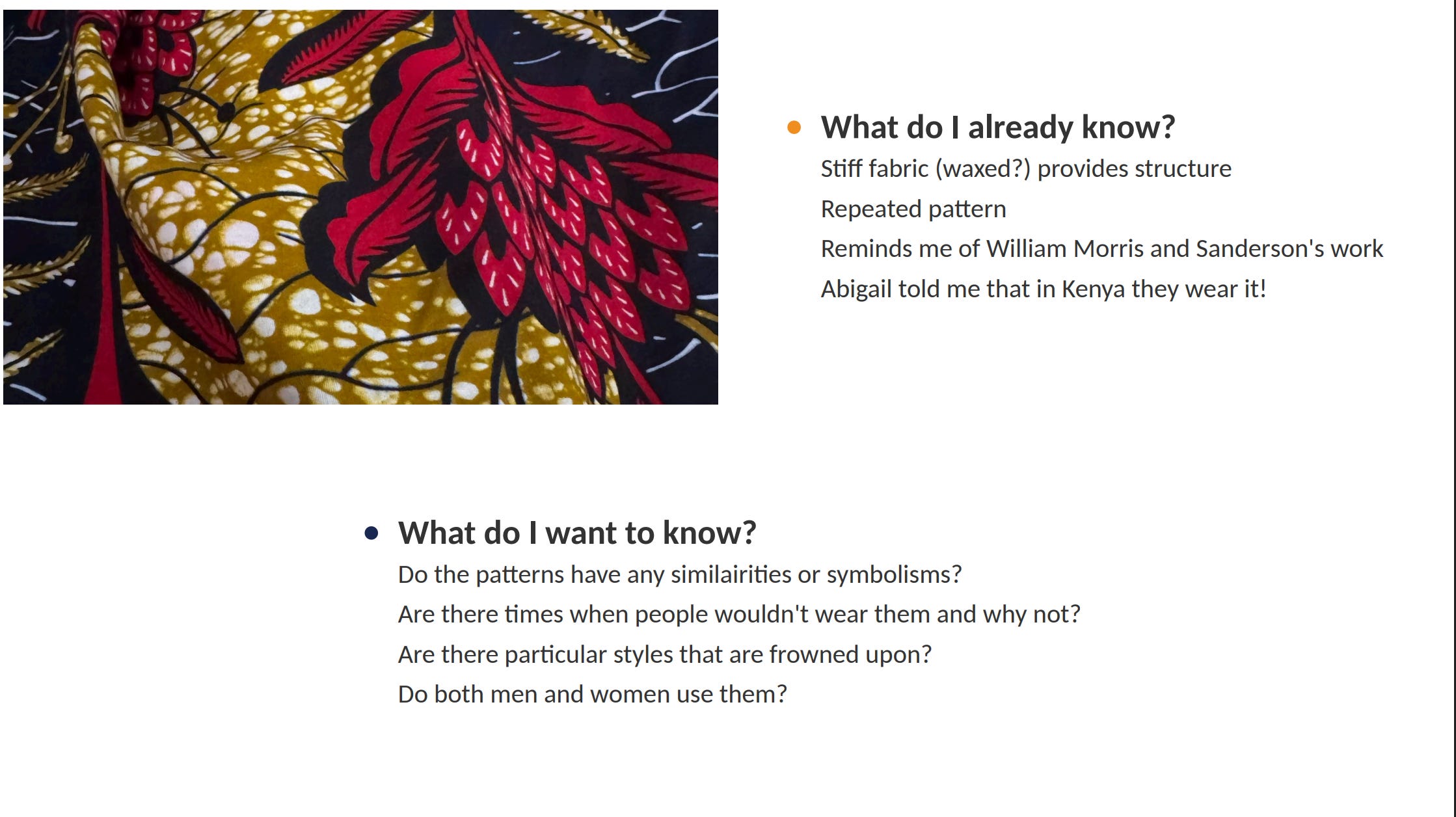
Then something else happened, I reached for familiarity.
This reminds me of William Morris.
This reminds me of Sanderson.
That moment, the careful internal comparison, is metacognition. Not entrenced in theory, but within practice.
Metacognition begins with noticing, before labels, before certainty and with inquisitiveness. It starts before expertise. It starts with the question: What am I paying attention to, and why?
Flavell described metacognition as knowledge about one’s own cognitive processes, the awareness of how we think, not just what we think (Flavell, 1979). Standing there, looking at Kitenge, I was doing exactly that. I was watching my mind build a bridge between the unfamiliar and the known.
Schemas, Stories and Fabric
Cognitive science tells us that learning happens when new information connects to existing schemas, mental structures that organise knowledge (Kirschner, Sweller & Clark, 2006). Schemas aren’t neutral, they’re cultural, they’re personal. They’re shaped by where we grew up, what we’ve seen, what we value.
My schema for pattern and textile design was rooted in British interiors: Arts and Crafts, heritage prints, wallpaper books. Kiteng1e didn’t sit outside that schema but stretched it.
This idea of noticing before naming is something I’ve come to appreciate more through the work of Oliver Caviglioli. His writing and visual work remind us that thinking is not invisible, it can be made visible through structure, spacing, pattern and design. Graphic organisers, when done well, don’t simplify thinking; they honour it. They slow cognition down just enough for learners to see what they are doing while they are doing it.
Example of graphic organiser for Kitenge fabric
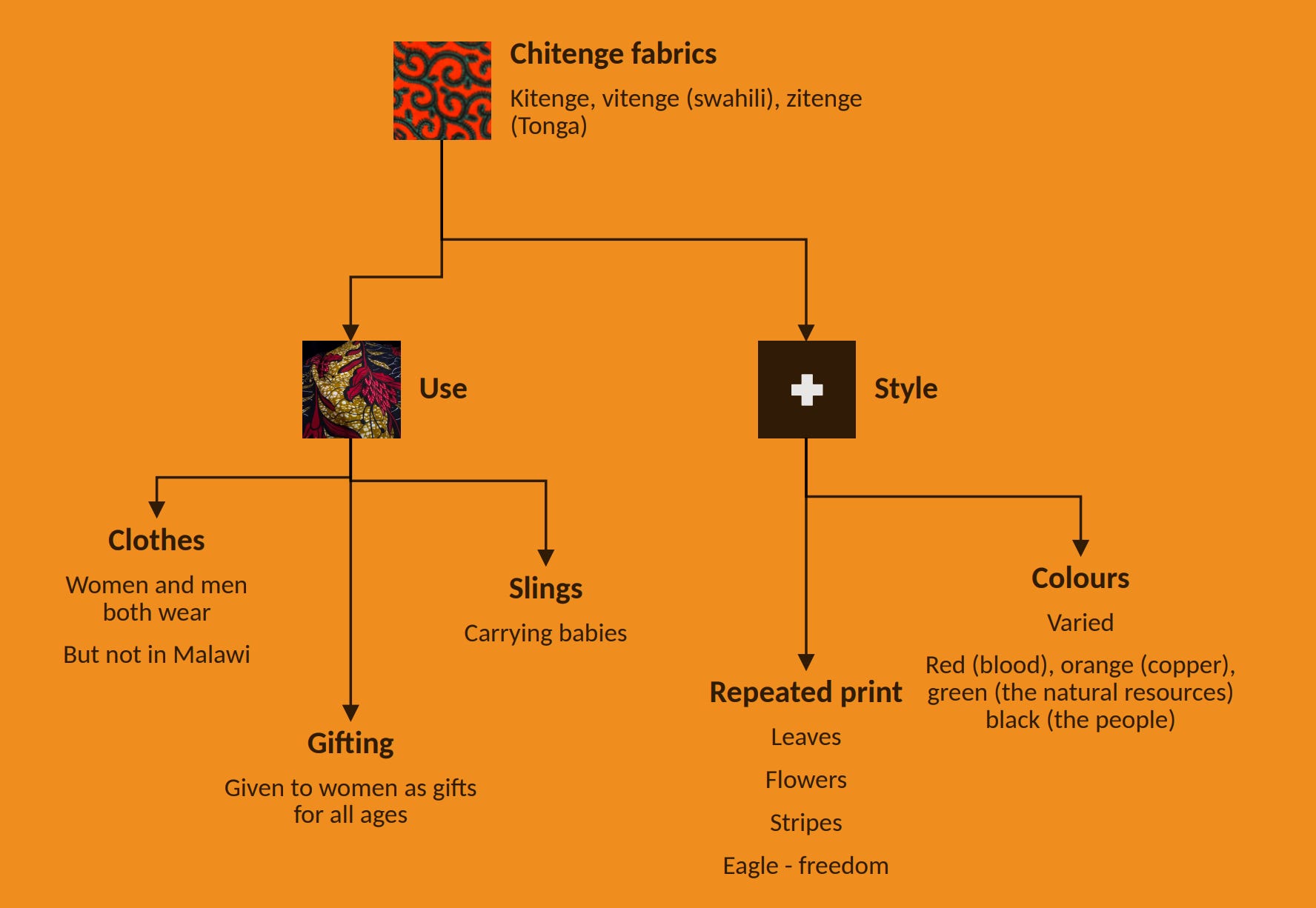
In Zambia, Chitenge did exactly that for me. It organised complexity through repetition and pattern. It made meaning legible. In the classroom, well-designed visuals serve the same purpose — not as decoration, but as cognitive scaffolding that helps learners build, test and refine their schemas.
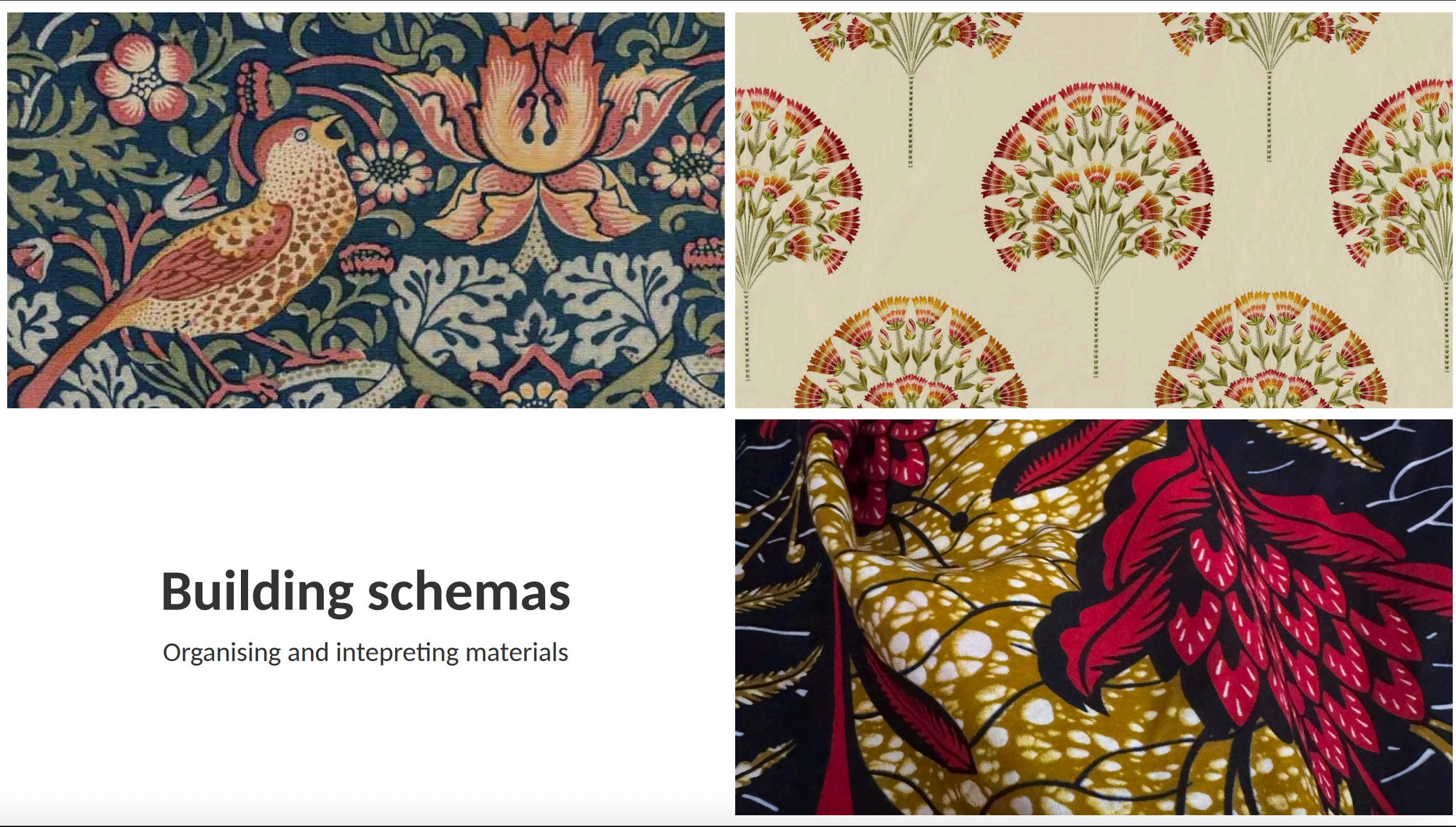
That’s metacognitive regulation: noticing that a strategy (comparison) is helping you understand something new, and allowing your thinking to adapt rather than shut down.
In classrooms, we often jump straight to outcomes:
Can they explain it?
Can they name it?
Can they apply it?
But metacognition asks a gentler, more powerful question first:
What did you notice that helped you understand?
My Zambia slide deck that I created, explicitly foreground this; building schemas, organising and interpreting materials, and using cultural reference points as anchors for learning . That matters, particularly in international and inclusive contexts.
Culture Is Not a Distraction From Learning
One of the quiet dangers of how metacognition is sometimes taught is that it becomes abstracted from lived experience. Sentence stems on a wall. Checklists in books. Reflection tasks that feel performative rather than meaningful.
But in Zambia, metacognition lived in:
Fabric gifted across generations
Colours carrying meaning (red for blood, green for land, black for people)
Practical use — clothing, slings, daily life
This aligns with Vygotsky’s insistence that learning is socially and culturally mediated. Metacognition doesn’t float above context but grows within it.
My slides emphasises using local language, familiar examples, and oral discussion as metacognitive tools, not add-ons . That’s not a pedagogical flourish, it’s a safeguard against excluded people and community experience.
Perhaps if children cannot see themselves in the lesson material, we shouldn’t be surprised when they struggle to reflect on their thinking about it.
Small Rungs, Not Tall Ladders
Another quiet lesson from Chitenge came later, when I thought about growth goals.
Metacognition is often framed as mastery: becoming a “self-regulated learner.” But in reality, it’s incremental. One rung at a time.
Not:
“I want to be top of the class.”
But:
“Last time I got 45%. This time, I’m aiming for 50% by changing one strategy.”
My Zambia work named this explicitly; growth goals, error analysis, learning from mistakes, focusing on process rather than performance . These aren’t motivational slogans. They are acts of being compassionate to yourself, something that I have to remind myself when running. This compassion is especially for children who’ve experienced failure, exclusion, or systems that weren’t built with them in mind.
What I Took Home With Me
I didn’t just take home a beautiful dress made for me. A year on, I don’t remember every slide I used in Zambia, but I do remember standing there, noticing fabric, watching my thinking shift, and realising something important:
Metacognition isn’t about teaching children to think harder, but about teaching them to think with awareness, to notice, to connect and to adjust.
Sometimes, the richest metacognitive moments don’t come from answers but from curiosity stitched into everyday life and sometimes, they begin with fabric.
References
Caviglioli, O. (n.d.). Visualising learning and thinking. Retrieved from
https://www.olicav.com/
Flavell, J. H. (1979). Metacognition and cognitive monitoring: A new area of cognitive–developmental inquiry. American Psychologist, 34(10), 906–911.
Kirschner, P. A., Sweller, J., & Clark, R. E. (2006). Why minimal guidance during instruction does not work. Educational Psychologist, 41(2), 75–86.
Vygotsky, L. S. (1978). Mind in Society: The Development of Higher Psychological Processes. Harvard University Press.
please note I use Kitenge or Chitenge interchangeable as they are referred to slightly differently depending on your cultural background and location.