Can you hear me?

My older daughter has recently been enjoying listening to System of a Down. As my little flex, I told her how their drummer once signed my ticket when I saw them at the now-defunct London Astoria.
Back then, my evenings were punctuated by gigs across London and wandering Tottenham Court Road when I could. I’d get lost in record shops for hours. I’d listen to music on a shonky Walkman that inevitably scratched my CDs, but still carried with me for my London jaunts, in my pocket of my commando trousers.
I didn’t find the gig ticket (it will turn up somewhere), but instead stumbled across my old diaries from just before that time. I usually try not to think about my childhood too much. It feels odd when people talk about happy relationships with siblings, parents, and grandparents, because my own memories are mostly echoes of fear and distress.
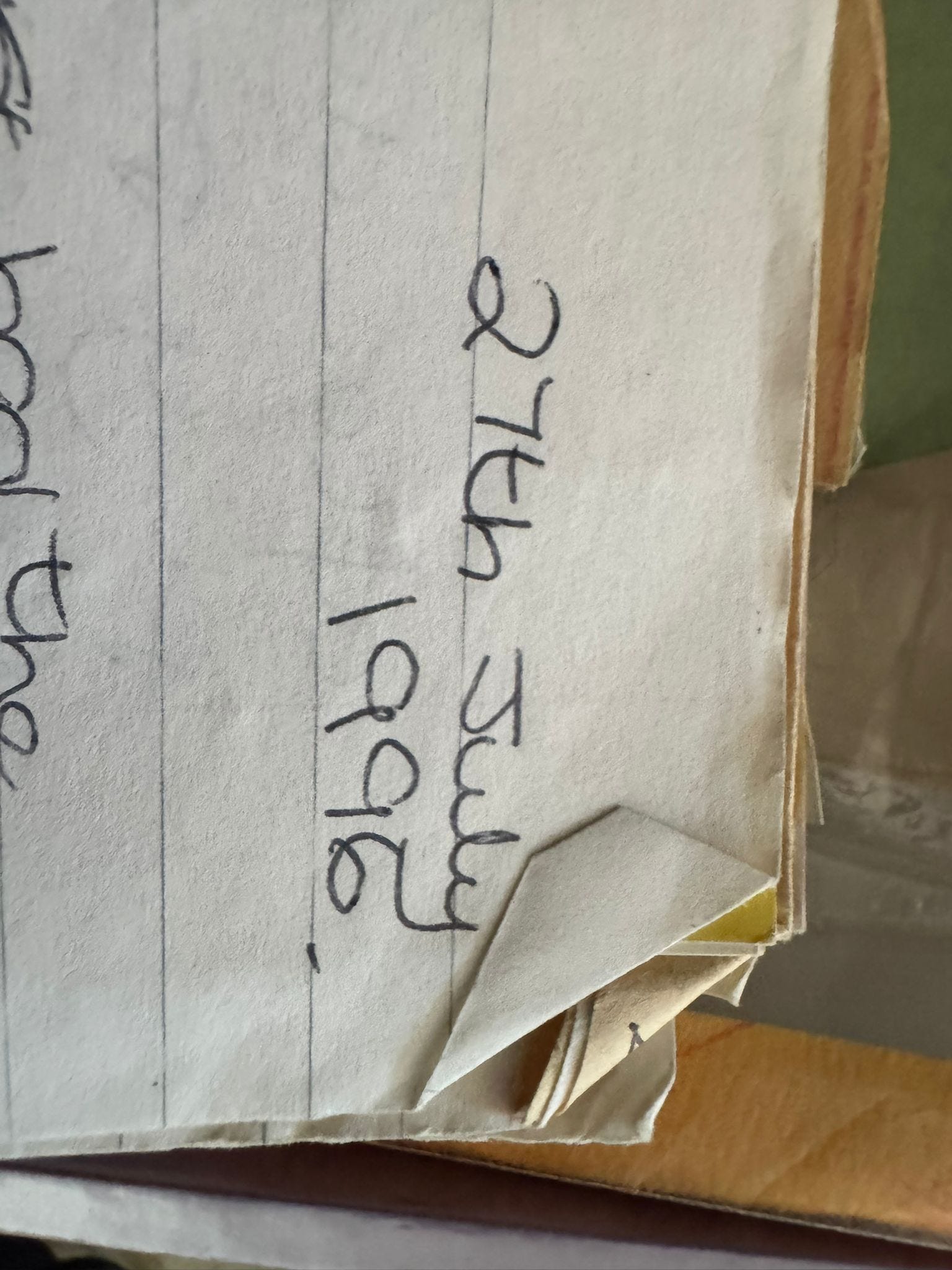
On the 27th of July 1996, when I was 13, I wrote a diary entry. Many of my diaries were written backwards, as if that would cloak my secrets. As if they were my secrets to bear in the first place.Sarah Kane wrote in 4.48 Psychosis: “Shame? Drown in your fucking shame.” I performed that piece, both as an actor but I also felt it with the very distress carved inside me.
Among those old diaries I also found a play I’d written. I think it’s the one I submitted to the Royal Court for their Young Writer’s Course. I never went. It was too alien, too far from my world. I convinced myself, or maybe someone else convinced me, that I wouldn’t succeed.
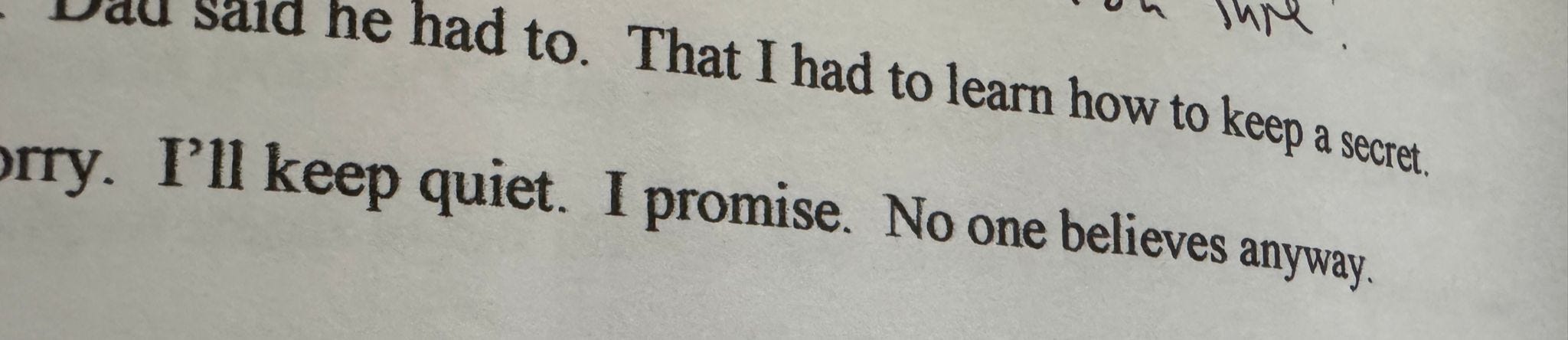
Looking at it now, it feels obvious: I was trying to process the madness that had been pressed into me. The play is called Can You Hear Me? and its recurring themes are clear: dreams that are never heard, phone calls that are never answered, the help that never comes. In one line I’d written:
“I’ll keep quiet. I promise. No one believes anyway.”
I was 13 years old. No 13-year-old should write that, feel that, or live that.
Fast forward twenty years, to 2016, when I was sexually assaulted. This time I reported it straight away. I didn’t keep a secret. I had faith I would be believed, and I was. But it still took three years before he was struck off by the HCPC, after he ignored conditions of practice and continuing to assault women. What plays over in my mind is that I wasn’t the first to report him. Other women had gone to the police before me. They weren’t believed. They didn’t need to keep quiet, because no one believes anyway. If they were heard, I wouldn’t have been hurt.
There’s strength in numbers, yes. We talk about collective voices as a way of preventing violence against women and girls, but it shouldn’t have to be that way. The lone voice should be powerful enough. It should echo through the silence.
I’ve been reading Quiet to my youngest daughters. In it, a bird stands alone, trying to stop the destruction of the forest. At first, her voice is small and unheard. Only when the others in the woods stand behind her does her voice ring loud and clear through the trees.
When I was interviewed by the BBC, and supported by my local MP, I spoke about how seven women came forward, with eight assaults reported (two were on me). But behind me stood other women who had reported but felt unable to go to court. And behind them, there is likely to be more still.
We stand together, to give strength to the lone voices.
And it makes me think about our children in school too. How do we make sure those quiet voices, the ones carrying madness, distress, or silent pain, are heard just as loud and clear as that little bird in the woodland?
It doesn’t matter where you teach, where children are, in our classrooms there are always children holding secrets, worries, or distress. Some may never speak them out loud. Some may only hint at them in their writing, drawings, or behaviour. Others might try to say it but feel, like I once did, that no one will believe them anyway. If women feel like that, how an earth must our little ones in schools feel? If we only listen to those with the loudest voices, we risk missing the most important cries for help. The children whose silence is carrying such a heavy weight.
Every voice matters, and sometimes, one small voice, that is heard and believed, can echo through a forest
.